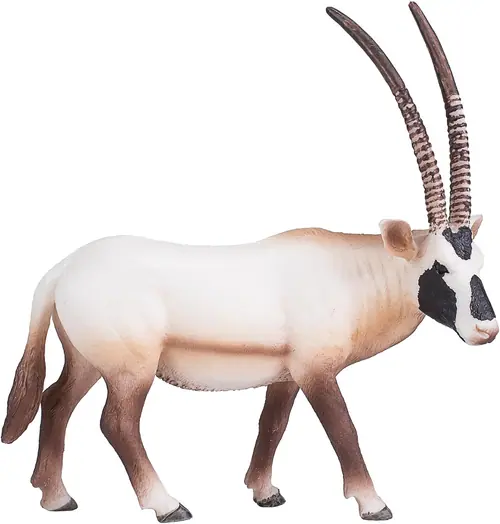
Getting Moisture from Food, Not a Watering Hole
Living in one of the driest environments on Earth, the addax has evolved to go long stretches — potentially its entire life — without drinking standing water. Nearly all the moisture it needs comes from the desert succulents, grasses, and herbs it eats, some of which store water in their leaves and stems even after months without rain.
Feeding at Night to Capture Dew
Because the addax is mostly nocturnal, resting through the heat of the day and feeding at night, it often browses on vegetation coated in overnight dew or morning humidity, adding a small but meaningful amount of extra moisture to its diet.
Efficient Kidneys and Concentrated Waste
Like many desert-adapted ungulates, the addax has kidneys built to conserve water, producing highly concentrated urine and drier droppings so that little moisture is lost to waste. This physiological efficiency, paired with its low overall water turnover, lets it thrive where surface water may be scarce or entirely absent for extended periods.
Following the Rains When It Can
When rain does fall in the Sahara, addax herds may travel to take advantage of the fresh plant growth that follows, but this is a matter of finding better forage rather than a need to drink — a trait that sets the addax apart from most other large mammals of similar size.