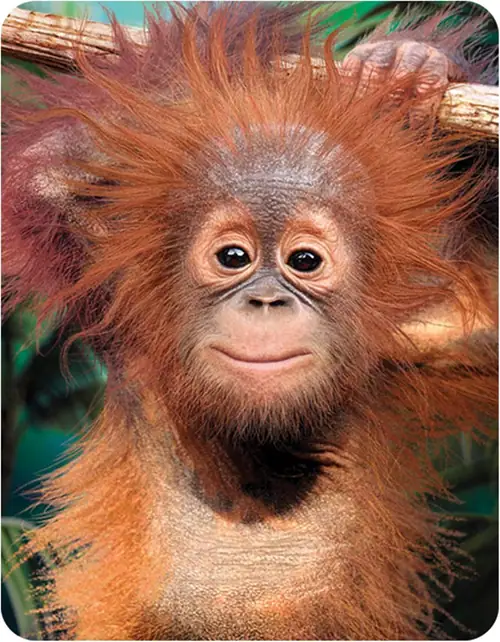
No Tails
The single clearest distinction between apes and monkeys is the tail: apes — gorillas, chimpanzees, bonobos, orangutans, and gibbons — have no tail at all, while nearly all monkeys do. This reflects a deeper evolutionary split; apes and monkeys diverged from a common ancestor tens of millions of years ago.
Bigger Brains, Different Bodies
Great apes have proportionally larger brains relative to body size than monkeys, along with broader chests, more flexible shoulders suited to swinging and climbing, and — in most species — the ability to walk upright for short distances. Monkeys are generally smaller, more numerous in species, and better adapted to fast quadrupedal movement through trees.
Great Apes vs. Lesser Apes
Apes themselves split into two groups: the "great apes" (gorillas, chimpanzees, bonobos, orangutans, and humans) and the "lesser apes," the gibbons and siamangs of Southeast Asia, which are smaller and even more specialized for swinging rapidly through the canopy.