Mammals · Cingulata
Armadillos
Dasypodidae (family)
Threatened
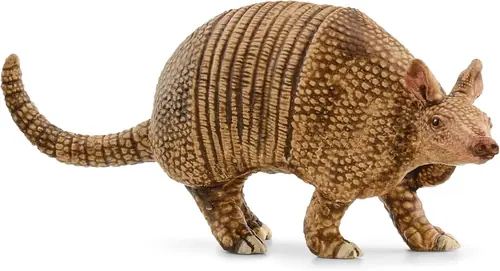
Armadillos are small placental mammals known for a leathery armor shell. Dasypodidae is the only surviving family in the order Cingulata, part of the superorder Xenarthra along with the anteaters and sloths. They are prolific diggers with sharp claws, used both to dig for food such as grubs and to excavate dens.

Classification
Kingdom: Animalia
Phylum: Chordata
Class: Mammalia
Order: Cingulata
Family: Dasypodidae
Other names: Hillbilly Speed Bump
Size
3–59 in. long, 8 oz–132 lbs, depending on species. The Giant Armadillo is the largest, up to 39 in. and 132 lbs; the Pink Fairy Armadillo the smallest, as little as 3 in. and 8 oz.
Habitat
Southern United States, Mexico, Central and South America — rain forest, grassland and semi-desert. Of the 20 armadillo species, only the nine-banded is found in the U.S.; the rest live in Latin America.
Description
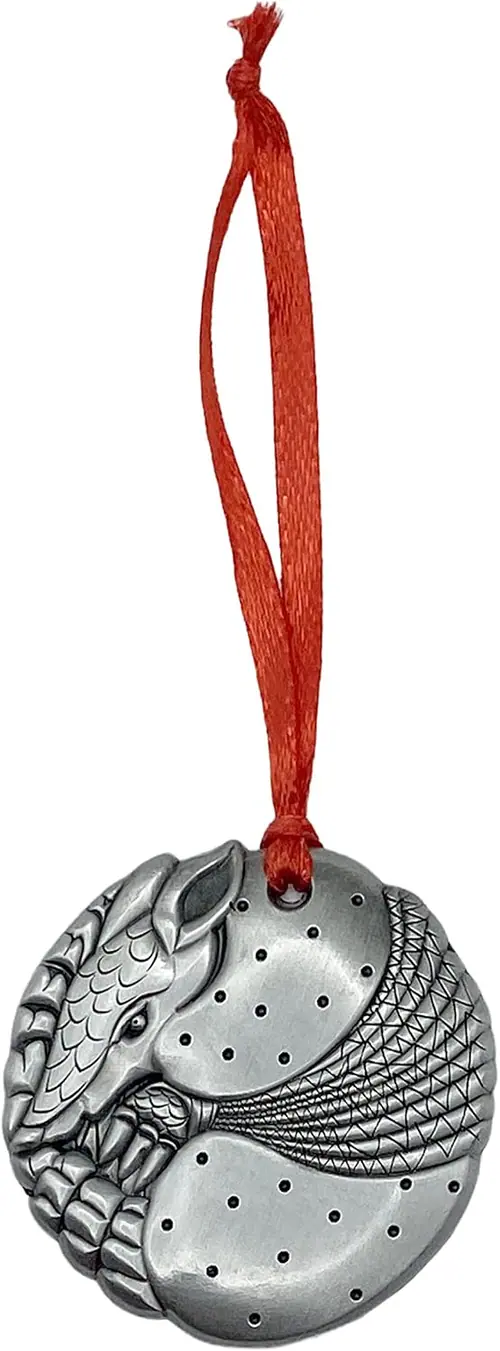
Sharp claws and a plated protective shell of overlapping scales; soft skin and fur on the underside; short legs.
Behavior
Prolific diggers that dig for food and excavate dens or burrows. Some species roll into a ball for protection; others run and hide in thorny brush. Armadillos sleep up to 16 hours a day.
Diet
Many species use their claws to dig for food — grubs, insects and small invertebrates.
Senses
Poor eyesight but a keen sense of smell.
Gestation
60–150 days, depending on species.
Birth
Litters of 1 to 12 pups, depending on species.
Sexually Mature
Between 9 and 12 months.
Life Span
4–30 years, varying greatly by species.
Athleticism
Armadillos can remain underwater for up to 6 minutes.
Conservation Status
Threatened.
Did You Know?
Armadillos are often used in the study of leprosy — they are one of the few non-human creatures known to carry the disease systemically.
Did You Know?
"Armadillo" is a Spanish word meaning "little armored one."
Did You Know?
Armadillos can hold their breath for several minutes, letting them cross small streams by walking along the bottom.
Armadillos in Foreign Languages
Catalanarmadillo
Chamicuromemili
Cherokeeuyasgala
Dutchgordeldier
Estonianarmadill
Finnishvyötiäinen
Frenchtatou
GermanGürteltier
Greekarmantíllo
Hungariangömböszka / tatu
Icelandicbeltisdýr
Indonesiantrenggiling
Irisharmadaillín
Italianarmadillo
Japanesearumajiro
Koreanareumadillo
Mandarinqiúyú
Navajokąą'ts'iną'
Polishpancernik
Portuguesetatu
Romaniantatu
Russianbronenósec
Slovakianpásavec
Slovenianarmadilo
Spanisharmadillo / armado / cachicamo / carachupa / cusuco / gurre / mulita / pitero / quirquincho / tatú / toche
Swahilikakakuona
Swedishbälta / bältdjur
Tagalogarmadilyo