Mammals · Rhinocerotids
Rhinoceros
Rhinocerotidae (five living species)
Three of five species Critically Endangered
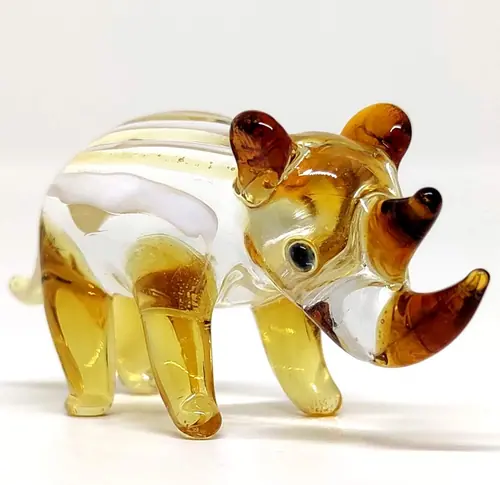
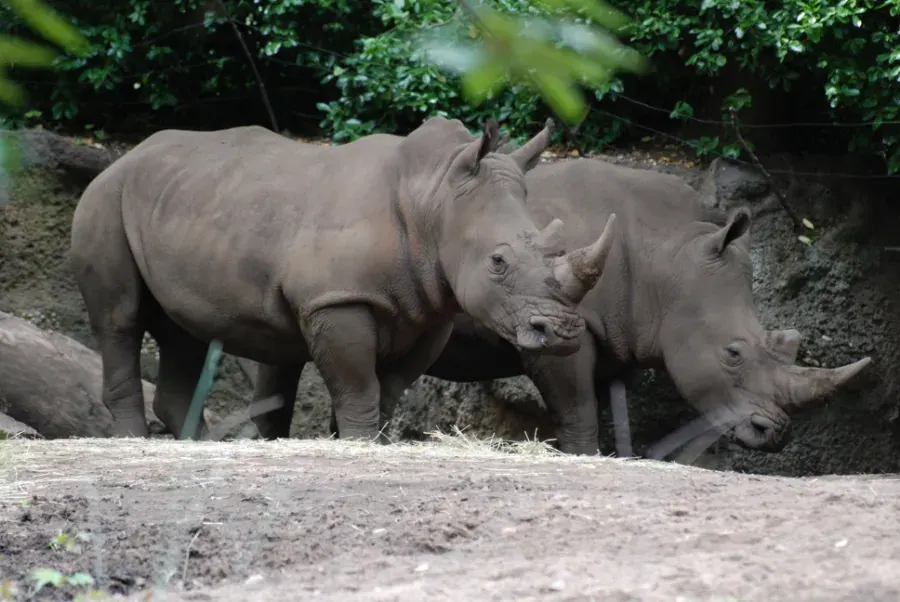
Rhinoceroses are massive, thick-skinned herbivores best known for the horn — made of keratin, not bone — that gives the family its name. Five living species survive across Africa and Asia, from the armor-plated Indian rhino to the two-horned white and black rhinos of the African savanna, and all but one are threatened chiefly by poaching for that horn.
Classification
Kingdom: Animalia
Phylum: Chordata
Class: Mammalia
Order: Perissodactyla
Family: Rhinocerotidae
Genera: Ceratotherium, Diceros, Rhinoceros, Dicerorhinus
Living species: 5 — white, black, Indian, Javan, Sumatran
Nearest relatives: Horses, tapirs and other odd-toed ungulates
Size
White rhino largest at up to 13 ft and 5,000 lbs; Sumatran rhino smallest at around 8 ft and 1,300–2,100 lbs.
Habitat
African savanna and grassland (white, black rhino); Asian tropical grassland, floodplain and rainforest (Indian, Javan, Sumatran rhino).
Description
Massive, thick, grey or brown hide with little hair, and one or two horns made of compressed keratin — the same protein as hair and fingernails, not bone or ivory.
Diet
Herbivore. White rhino grazes grass with a wide, flat lip; black, Sumatran and Javan rhinos browse leaves and shoots with a pointed, prehensile upper lip.
Speed
Can run at 30–34 mph despite weighing up to two and a half tons.
Senses
Poor eyesight but an outstanding sense of smell and hearing, aided by oxpecker birds that ride along and call an alarm at danger.
Gestation
15–16 months, among the longest of any land mammal.
Birth & Litter Size
A single calf, weighing 90–140 lbs, able to stand within hours and staying with its mother for 2–3 years.
Sexually Mature
5–7 years for females, 7–10 years for males.
Life Span
35–50 years in the wild.
Social Structure
Adult males are largely solitary and territorial; females and calves may form small loose groups, especially in white rhino.
Conservation status
Javan and black rhino Critically Endangered; Sumatran rhino Critically Endangered with fewer than 50 remaining; Indian rhino Vulnerable; white rhino Near Threatened.
Did You Know?
A rhino’s horn is made entirely of keratin — the same protein found in human hair and fingernails — not bone or ivory, and it continues growing throughout the animal’s life.
Did You Know?
The name "white rhino" has nothing to do with color; it likely comes from a mistranslation of the Afrikaans "wyd," meaning wide, describing its broad, square lip.
Did You Know?
Oxpecker birds ride on rhinos to feed on ticks, and their sharp alarm call warns a rhino of approaching danger long before its poor eyesight would.
Rhino in Foreign Languages
Frenchrhinocéros
GermanNashorn
Italianrinoceronte
Portugueserinoceronte
Spanishrinoceronte
Russiannosoróg
Polishnosorożec
Swahilifaru
Zuluubhejane
Afrikaansrenoster
Arabicwahid al-qarn
Hindigainda
Japanesesai
Mandarinxīniú
Koreanko-ppuljinso
Greekrinókeros
Turkishgergedan
Dutchneushoorn
Malaybadak
Vietnamesetê giác