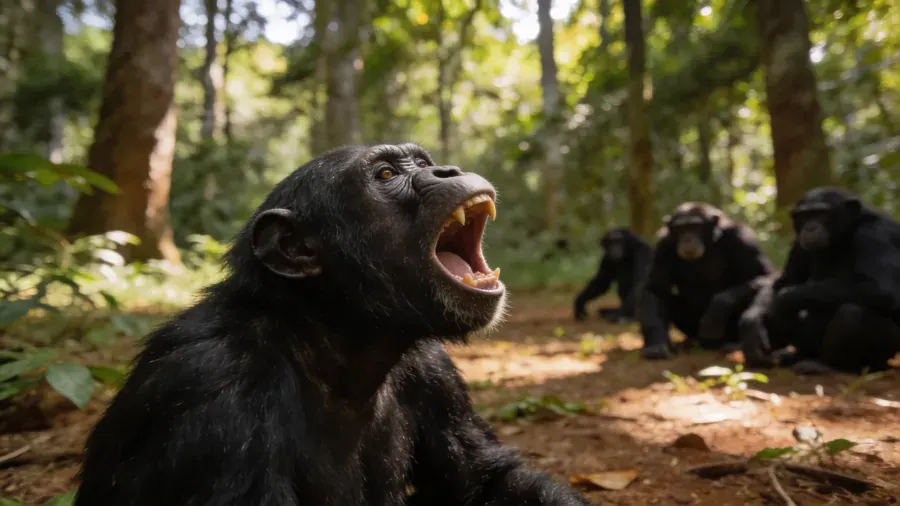
A Mix of Calls, Gestures, and Expressions
Apes communicate using a combination of vocal calls, facial expressions, and body language. Chimpanzees use pant-hoots to announce their location to distant group members, while gorillas rely on chest-beating and deep grunts to signal dominance or alarm. Facial expressions, including bared-teeth grins and playful open-mouth faces, carry specific social meanings within a troop.
Gibbons Sing to Defend Territory
Gibbons are known for elaborate, loud songs that can carry for over a mile through dense forest canopy. Mated pairs often perform coordinated duets at dawn, a display that helps establish and defend territory while reinforcing the pair bond between mates.
Learning Sign Language in Captivity
Because apes lack the vocal anatomy needed for human speech, researchers have studied their capacity for language through other means. Several captive gorillas, chimpanzees, and orangutans have been taught modified sign language or symbol boards, learning to use dozens or even hundreds of signs to request food, express needs, or identify objects.
Communication Tied to Social Bonds
Much ape communication serves to maintain social bonds rather than convey new information. Grooming is often accompanied by soft vocalizations, and reconciliation after conflict frequently involves specific gestures, such as an extended hand or embrace, that help repair relationships within the group.