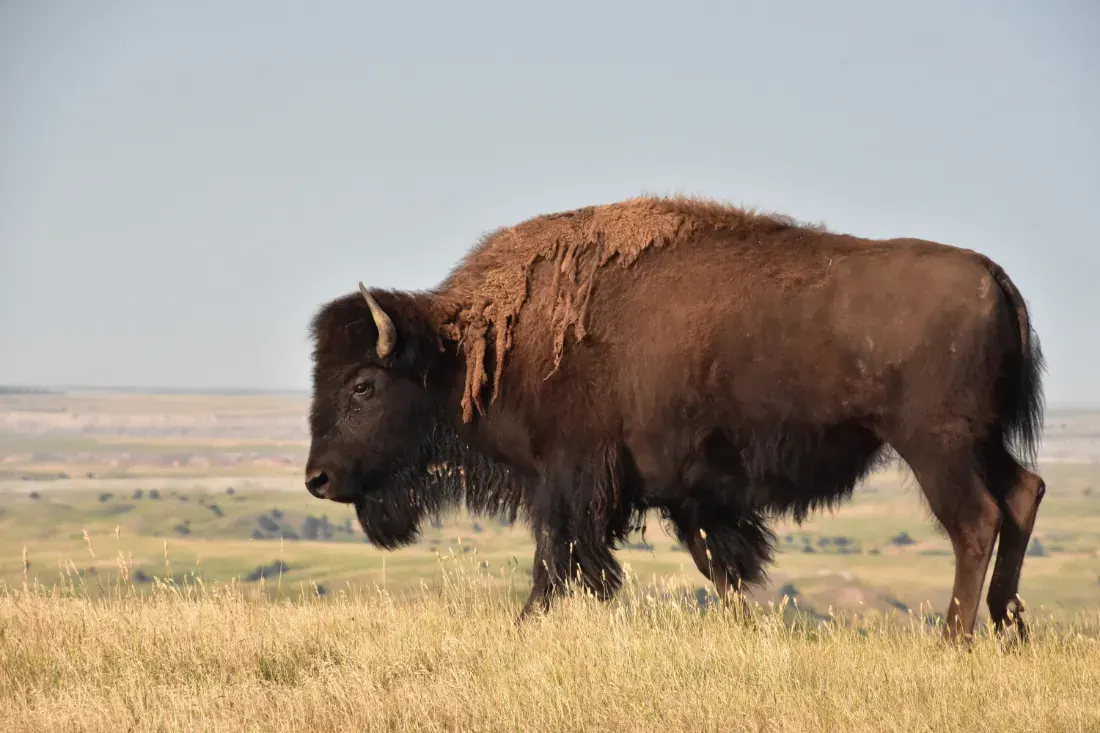
The American bison, Bison bison, is the largest land mammal in North America. Bulls can reach about 2,000 pounds and stand roughly six feet at the shoulder, while cows are noticeably smaller at around 1,000 pounds. The huge shoulder hump is muscle that powers the head when bison sweep snow aside to graze in winter, and the thick, shaggy coat on the head, neck and forequarters insulates against bitter cold.
Speed and strength
Despite their bulk, bison are agile and fast, able to run at about 35 miles per hour and jump a fence of five feet or more from a standstill. They are also strong swimmers. Their senses of smell and hearing are excellent, though their eyesight is only moderate.
Herds and calves
Cows and young live in herds, while mature bulls often travel alone or in small groups except during the summer breeding season, when they gather to compete for mates. After a gestation of roughly nine months, a single calf is born in spring. Calves are cinnamon-orange for their first months and are sometimes called red dogs before molting into the dark brown adult coat.
Two kinds of bison
Two subspecies are recognized, the plains bison and the larger, darker wood bison of northern Canada. The separate European bison, or wisent, is a close relative in Europe. Once numbering in the tens of millions, American bison fell to a few hundred animals by the late 1800s before conservation herds helped them recover; in 2016 the bison was named the national mammal of the United States.