Mammals · Camelidae
Camels
Camelus (genus)
Wild Bactrian: Critical Risk
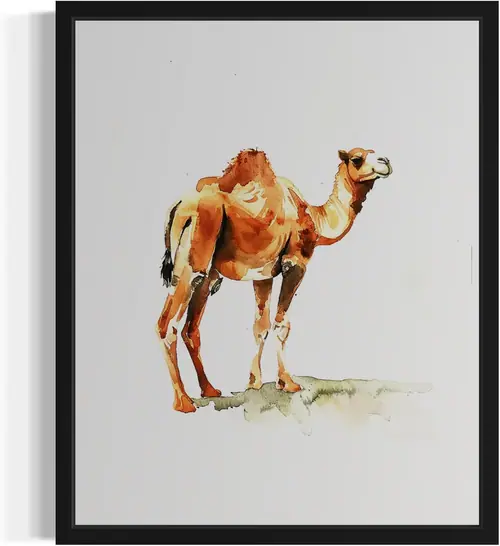
A camel is an even-toed ungulate within the genus Camelus, bearing distinctive fatty deposits, known as humps, on its back. There are two species of camels: the dromedary or Arabian camel has a single hump, and the Bactrian camel has two humps. Dromedaries are native to the dry desert areas of West Asia, and Bactrian camels are native to Central and East Asia.
Classification
Kingdom: Animalia
Phylum: Chordata
Class: Mammalia
Order: Artiodactyla
Family: Camelidae
Genus: Camelus
Other names: Dromedary, Bactrian, Arabian Camel
Conservation Status
The Wild Bactrian camel is at critical risk.
Species
Two species: the dromedary or Arabian camel has a single hump, and the Bactrian camel has two humps.
Size
5.9-7.5 ft tall at the shoulder (7-8.5 ft at the apex of the hump), 7.5-11.3 ft long. Weigh 660-1,520 lbs.
Habitat
Found in Asia. Dromedaries native to dry desert areas of West Asia, North Africa and the Middle East; Bactrian camels native to Central and East Asia. Prefer desert, prairie, and steppe.
Description
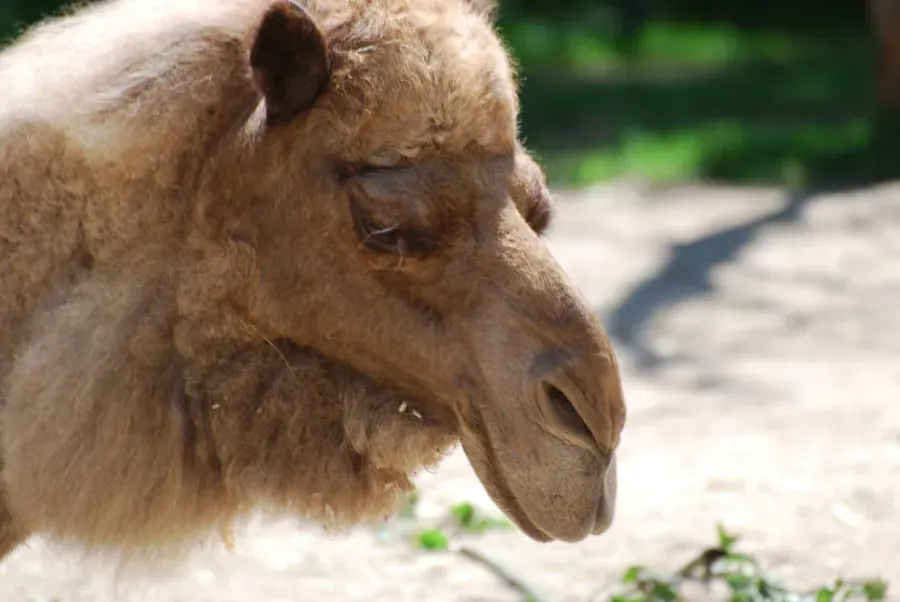
Dromedary camels have one hump, Bactrian camels have two. Woolly, caramel-colored coat that often looks shaggy from seasonal shedding.
Behavior
Can travel as fast as horses, but endure legendary periods of time without food or water — a week or more without water, several months without food.
Diet
Short grass, thorny or salty vegetation, and even fish. Like cows, camels regurgitate their food to chew it again. A thirsty camel can drink 30 gallons of water in a short time.
Communication
Moaning, groaning sounds, high-pitched bleats, and loud bellows.
Gestation
12 to 14 months.
Birth
Give birth to a single calf at a time.
Sexually Mature
Males 6-8 years of age; females around 3 years.
Life Span
40 to 50 years on average.
Social Structure
Often travel in groups called flocks or caravans.
Unusual
Humans have used camels for their wool, milk, meat, leather, and even dung for fuel.
Did You Know?
Camels can run at up to 40 mph for short bursts, and can sustain speeds of 25 mph.
Did You Know?
Camels do not store water in their humps as is commonly believed — the humps are actually a reservoir of fatty tissue.
Camels in Foreign Languages
Afrikaanskameel
Arabicjámal
Cherokeegemili
Czechvelbloud
Danishkamel
Dutchkameel
Finnishkameli
Frenchchameau
GermanKamel / Trampeltier
Hebrewgamal
Hungarianteve
Indonesianunta
Italiancammello
Japaneserakuda
Koreannakta
Latincamelus
Mandarinluòtuó
Persianšotor
Polishwielblad
Portuguesecamelo
Russianverbljúd
Spanishcamello / dromedario
Swahilingamia
Turkishdeve / hecin