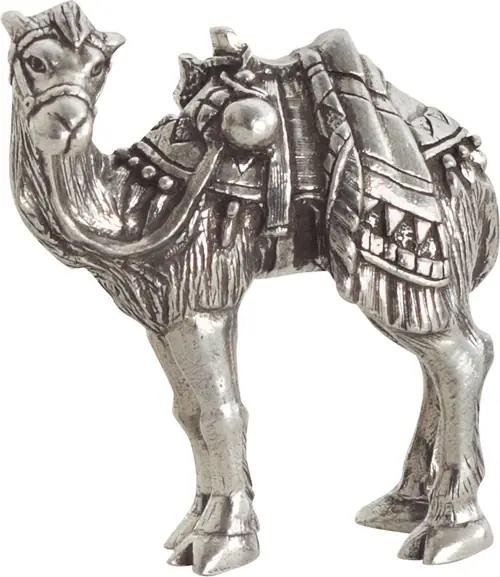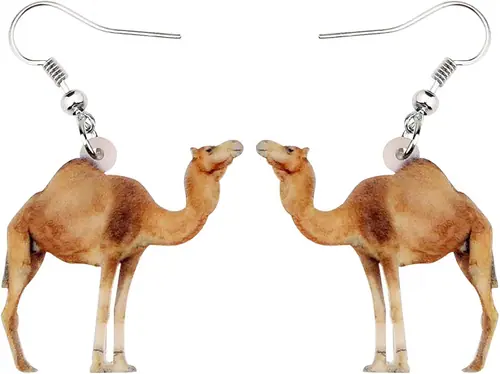
Camels are supremely well suited to life in harsh, arid environments, and carry a long list of physical adaptations that let them thrive where few other large mammals could survive.
Their humps do not store water, as is commonly believed — they store fat, which the camel's body can convert to both energy and water when food is scarce. Concentrating fat in one place, rather than spreading it under the skin, also helps the camel release excess body heat more efficiently.
Camels have oval-shaped red blood cells, unlike the round cells of most mammals — this shape lets blood keep flowing even when the animal is severely dehydrated, and lets the cells swell without bursting when the camel drinks large volumes of water quickly (up to 30 gallons in a matter of minutes).
Thick, bushy eyebrows and a double row of long eyelashes shield the eyes from blowing sand, while nostrils that can close almost completely keep sand out of the respiratory tract during a sandstorm. Wide, tough, padded feet spread the camel's weight and let it walk easily across loose sand without sinking.
Camels can also tolerate a wider swing in body temperature than most mammals, letting their internal temperature rise during the heat of the day rather than sweating to cool down — a strategy that conserves precious water.