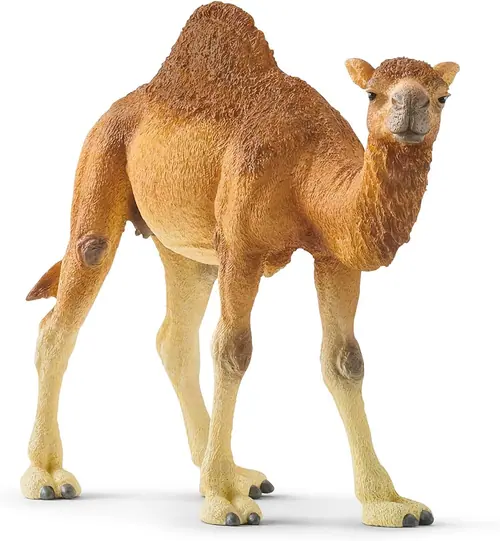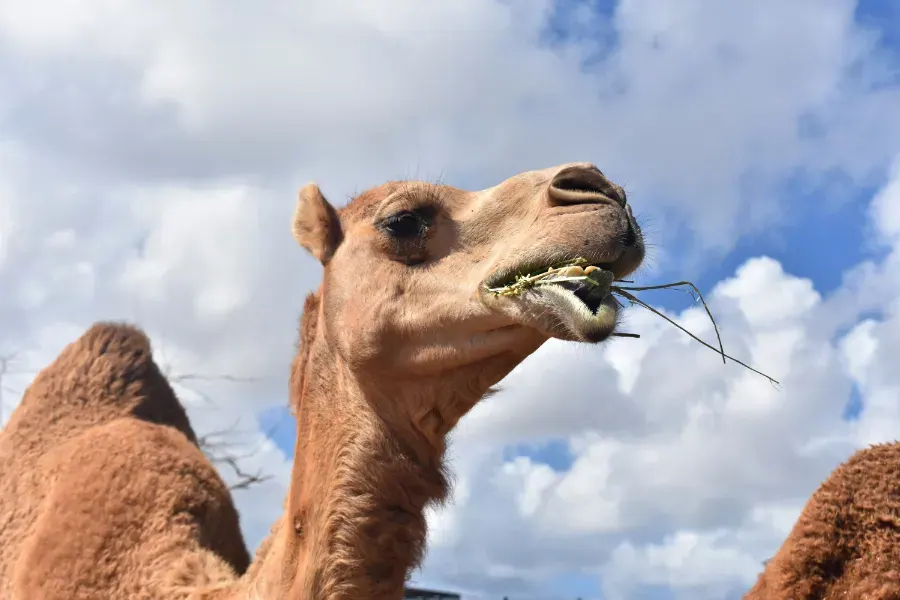
A camel is an even-toed ungulate within the genus Camelus, bearing distinctive fatty deposits, known as humps, on its back. There are two surviving species of camel: the dromedary, or Arabian camel, has a single hump, and the Bactrian camel has two humps. Dromedaries are native to the dry desert areas of West Asia, and Bactrian camels are native to Central and East Asia.
Both species have been domesticated for thousands of years — used for milk, meat, hair, and leather, and as a pack and riding animal capable of carrying heavy loads across terrain few other animals could cross. A now-extinct Wild Bactrian camel population still survives in small numbers in remote parts of Mongolia and China, and is considered critically endangered.
Camels are gregarious animals that live in loosely organized herds, generally led by a dominant male. They communicate through a range of moaning and groaning vocalizations, and through body posture.