Mammals · Primates
Lemurs
Prosimians (suborder)
Varies by Species
Lemurs are named after the lemures — ghosts or spirits — of Roman mythology, for the ghostly vocalizations, reflective eyes, and nocturnal habits of some species. Today there are nearly 100 species of lemurs, most discovered or promoted to full species status since the 1990s.
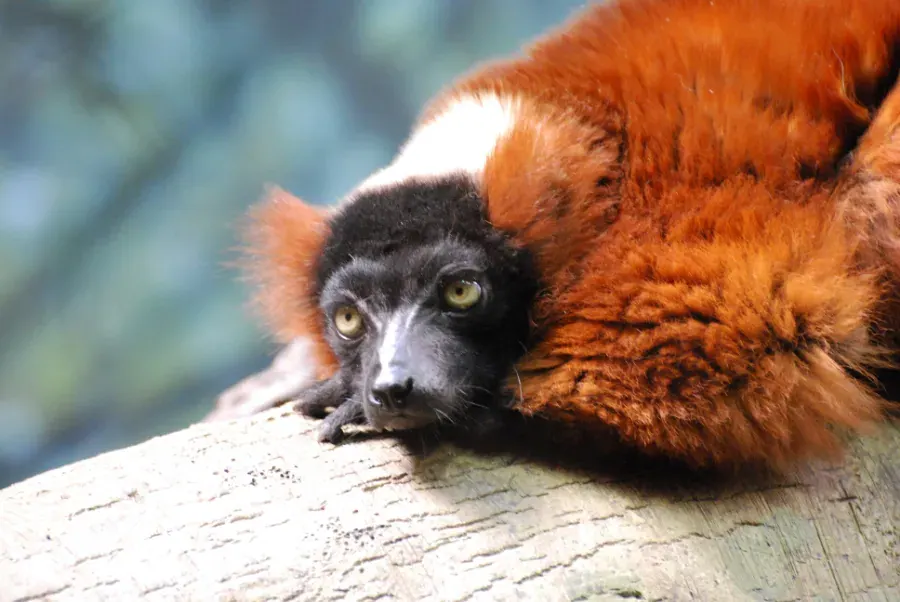
Classification
Kingdom: Animalia
Phylum: Chordata
Class: Mammalia
Order: Primates
Other names: Maki, Hira
Size
Ranges from 1.1 oz (the pygmy mouse lemur) to 20 lbs (the indri) — lemurs vary greatly in size and appearance.
Habitat
Lemurs live only on Madagascar, a large island off the east coast of Africa, and on the nearby Comoros Islands.
Description
Like all primates, lemurs have five digits with nails on their hands and feet. They have long snouts and a well-developed sense of smell. Prosimians rely more on smell than sight and have smaller brains than other primates.
Diet
Most lemur species eat a wide variety of fruits and leaves.
Communication
Lemurs communicate through sound, sight and smell, marking their territory as a form of communication.
Gestation
Varies greatly by species, ranging from 9 to 24 weeks.
Life Span
Varies by species.
Social Structure
Great variability by species. Most lemurs are social and live in groups usually of fewer than 15 individuals.
Did You Know?
The word lemur comes from the word lemures, meaning ghosts or spirits.
Did You Know?
Lemurs are primarily arboreal.
Lemurs in Foreign Languages
ArabicLimuur
ArmenianLemur
CatalanLèmur
MandarinHóhóu
DutchLemur
EsperantoLemuro
FinnishMakimainen Puoliapina
FrenchLémur
GermanLemur / Lemure
HungarianMaki / Makimajom
IcelandicLemúr
ItalianLemure
JapaneseKitsunezaru
KoreanYeou-weonsungi
LithuanianLemuras
Navajomósí bitsee’ noodóózígíí
NorwegianLemur
PolishLemur
PortugueseLêmure
RomanianLemur
RussianLlemúr
SpanishLémur
SwedishLemur