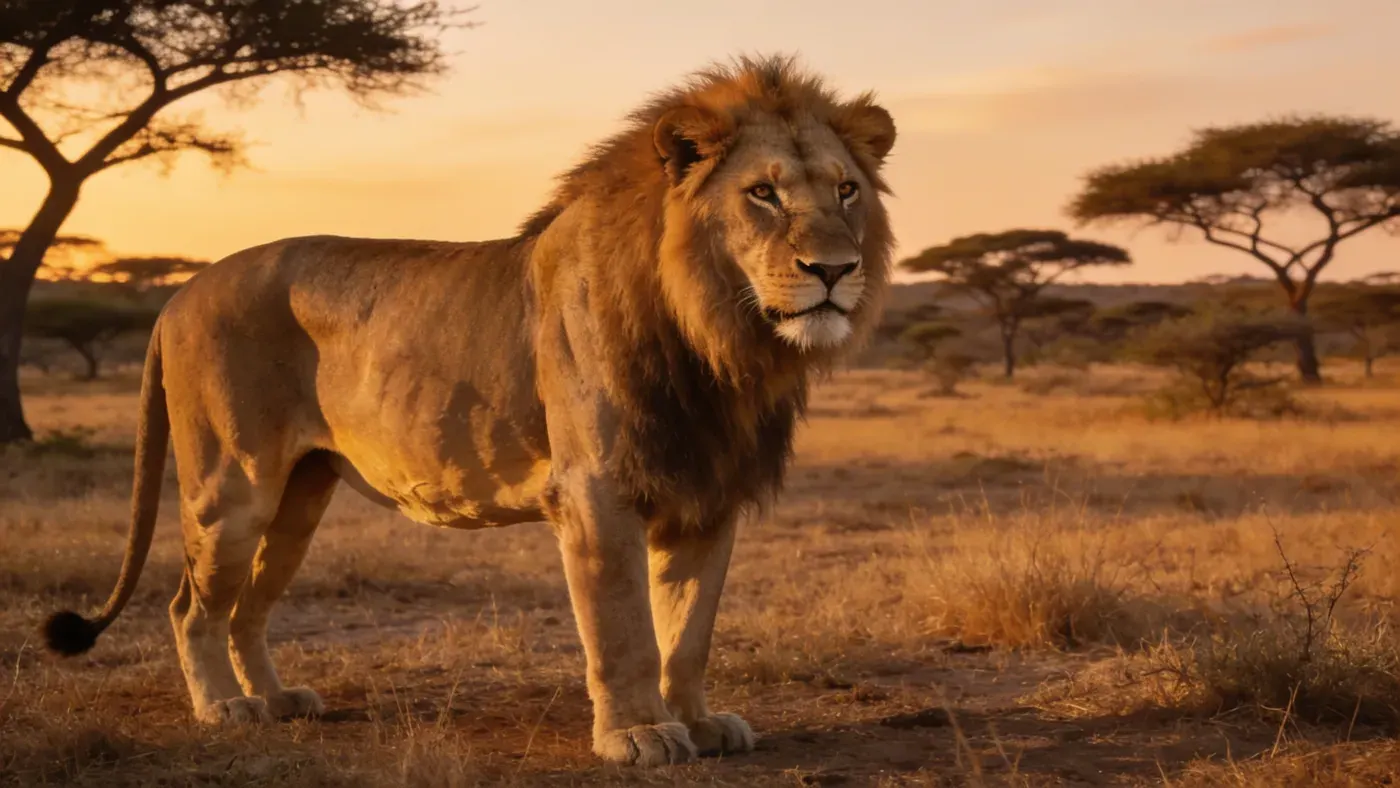
A Species in Retreat
The African lion is classified as Vulnerable on the IUCN Red List, and the trend behind that classification is what concerns biologists most. Lions once ranged across nearly all of Africa outside the Sahara and the deep rainforest belt, along with parts of southern Europe, the Middle East and India. Today they occupy a small fraction of that historic range, and the wild population is estimated in the low tens of thousands rather than the hundreds of thousands recorded a century ago.
What Is Driving the Decline
No single cause explains the loss. Land is converted for farming and settlement, which removes both territory and the wild prey lions depend on. As prey thins out, lions turn to livestock, and retaliatory killing by herders follows. Poaching of prey species for bushmeat empties reserves of the antelope and zebra that support a pride. Added to that is a growing illegal trade in lion bones and body parts, and poorly regulated trophy hunting in some jurisdictions.
The Regional Picture
The situation differs sharply by region. Populations in parts of southern Africa — Botswana, Namibia, South Africa and Zimbabwe — are comparatively stable or increasing inside well-managed protected areas. East Africa holds the largest remaining strongholds in the Serengeti and Maasai Mara ecosystems. West and Central Africa are the crisis regions: lions there survive in tiny, isolated groups, and the West African lion is now considered critically endangered, with only a few hundred individuals spread across a handful of parks.
What Reverses the Trend
Where lions have recovered, the reasons are consistent. Protected areas are large enough and connected by corridors. Anti-poaching patrols are properly funded and staffed. Communities living alongside lions receive a direct share of tourism revenue and compensation for livestock losses, which changes the economics of killing a lion. Predator-proof livestock enclosures, in particular, have cut retaliatory killings dramatically in several Kenyan and Tanzanian conservancies.
Extinction Is Not Inevitable
The lion is not a species with no path forward. It breeds readily, adapts to a wide range of open habitats, and rebounds quickly when prey and protection are available. The obstacle is political and financial rather than biological — sustaining the funding and the local agreements that keep large protected landscapes intact.