Appearance
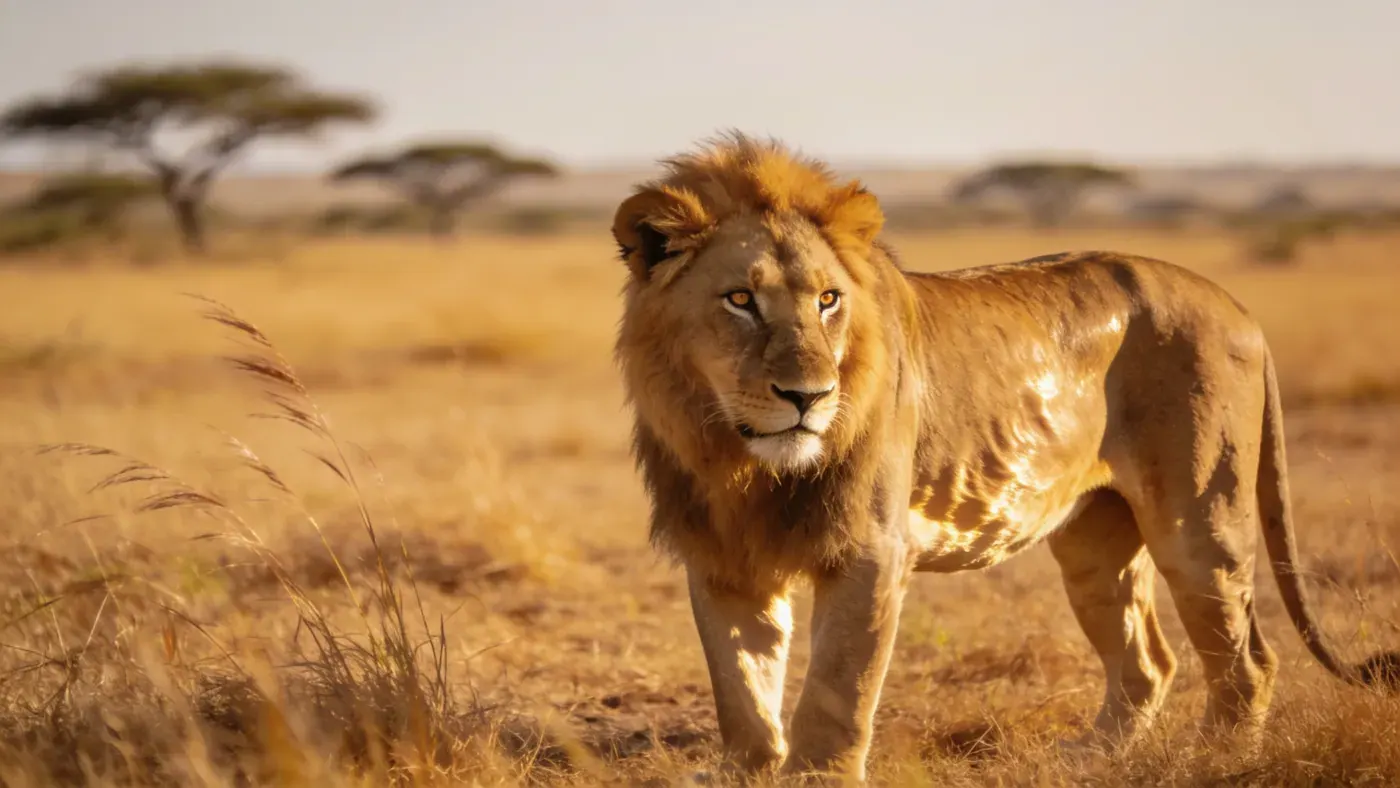
Lions are often nicknamed the "King of the Jungle," though the name is misleading — lions actually live in grassy plains, savannas, open woodlands, and scrub country rather than dense jungle. Unlike other big cats, the adult lion has no patterned coat. Lions have plain tawny coats and a distinctive tuft of dark hair at the end of the tail, and that tan coloring allows them to blend into the dry grass of the African plains. Male lions grow a hairy mane that frames the face, the clearest visual difference between the sexes.
Size & Speed
Male lions stand roughly 3 to 4 feet at the shoulder and measure 5 to 8 feet in body length, weighing between 330 and 500 pounds. Females are noticeably smaller and lighter, typically 20 to 35 percent smaller and around half the weight of a large male. Over short distances, a lion can reach a top speed of about 50 miles per hour — fast enough for a closing charge, but not sustainable over a long chase, which is why lions rely on stalking to get close before committing.
Prides & Territory
Lions are territorial, and a lion’s roar can be heard from over 5 miles away — a long-distance announcement of ownership as much as a call to locate pride members. Lions live in groups called prides, most commonly numbering up to about 15 animals, though large prides can reach 40. A typical pride consists of related females with their young, defended by one male or a small coalition of males.
Cubs
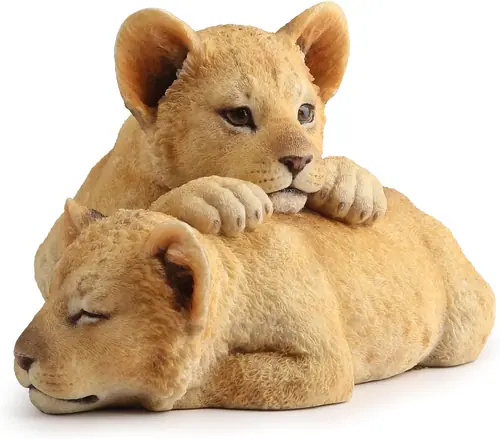
A typical litter is 3 to 4 cubs. Lion cubs are born with faint spots and rosettes on their coats, which fade as they mature into the plain tawny coloring of an adult. Cubs begin joining hunts at around 11 months old but may remain with their mother for up to two years before becoming independent. Cub mortality is high in the wild, with many not surviving their first year due to starvation, predation, or takeovers by rival males.
Hunting & Diet
Female lions do the overwhelming majority of the hunting, working primarily at night and in coordinated teams that allow them to bring down prey much larger than any individual could manage alone. Lions prey on zebra, giraffe, buffalo, warthog, wildebeest, and a wide range of smaller animals, and are occasionally known to attack young or weakened elephants when food is scarce. Males contribute less to hunting but play the key role in defending kills and pride territory from rivals and scavengers.
Lifespan
The average lifespan of a lion in the wild is 10 to 14 years, and in captivity lions can exceed 20 years. Wild males typically live shorter lives than females — often not past 10 years — because the constant fighting required to hold a pride and territory takes a heavy physical toll.