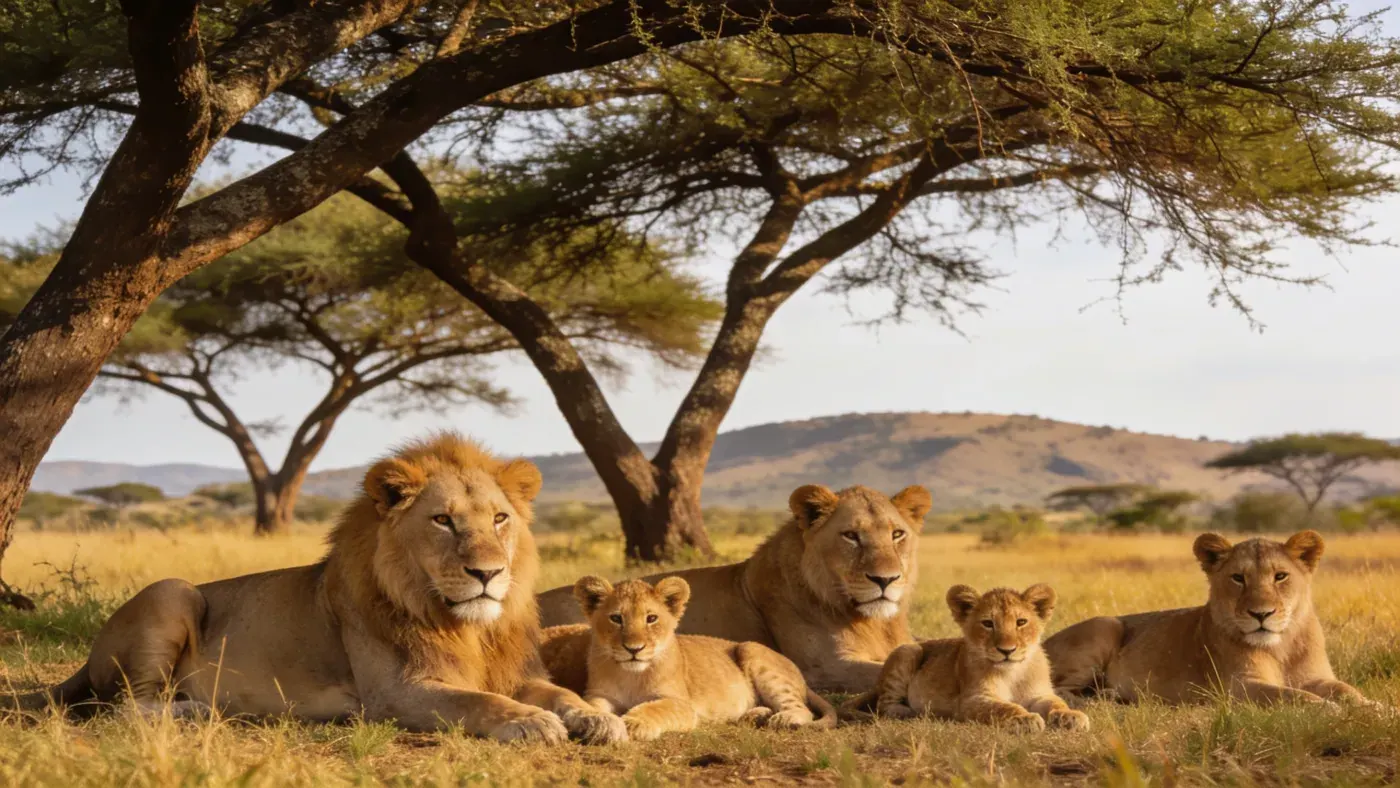
Top of the Food Chain
The lion sits unquestionably at the top of the food chain in Africa, and that position makes it far more than a symbol. As an apex predator, the lion regulates populations of grazing animals across the savanna, and if its decline becomes permanent, the repercussions for some of Africa's ecosystems could be dramatic. The Okavango Delta in Botswana is one region where the lion's continued survival is especially important to the balance of the wider ecosystem.
The Lion's Decline
The African lion's numbers have been a cause for serious concern in recent decades. Just over a century ago, lions ranged widely across the whole of Africa south of the Sahara. Today, free-ranging lions are the minority, and in many places the only realistic opportunity to see one in something close to its natural habitat is within a large conservation park or protected reserve. The cause is not natural — habitat conversion for agriculture and settlement, loss of prey species, and conflict with livestock farmers have driven the decline, with the species now estimated to occupy only a small fraction of its historic range.
Keeping the Lion on the Planet
In parts of Africa where lions once ruled, their calls are no longer heard at all. In Central and West Africa in particular, free-ranging lion populations are critically low, and the West African lion is now considered one of the most threatened lion populations anywhere. Conservation groups clearly recognize the situation, but securing sustained funding and political commitment for protection and anti-poaching work remains a persistent obstacle. Where that support does exist — community conservancies, well-managed national parks, and cross-border protected corridors — lion numbers have proved capable of holding steady or recovering.
A Note on the "King of the Jungle"
Despite the enduring nickname, lions do not live in jungle. They are animals of grassy plains, savanna, open woodland, and scrub. The phrase most likely comes from older, looser uses of the word "jungle" to mean wilderness generally, rather than dense tropical rainforest — the habitat far more closely associated with the leopard, jaguar, and tiger.