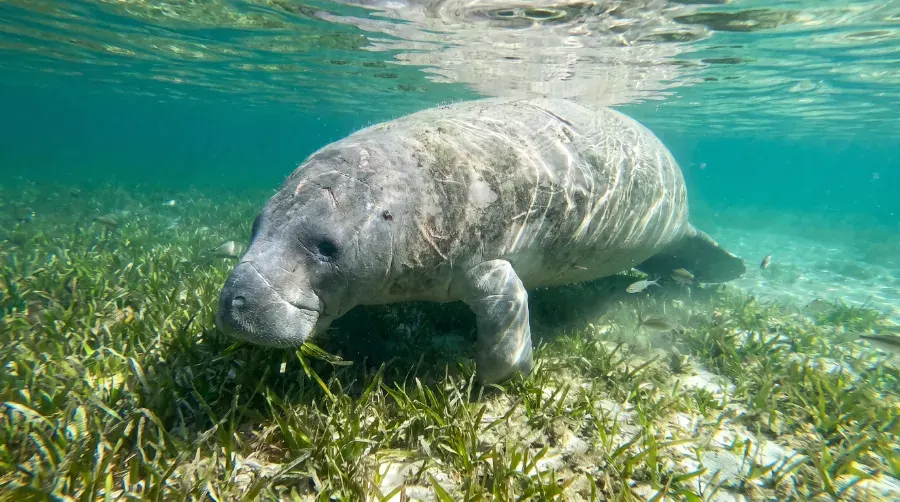
Manatees are gentle, slow-moving marine mammals that spend most of their day doing three things: eating, resting, and traveling between feeding grounds. As herbivores, an adult manatee can eat up to a tenth of its own body weight in aquatic plants over 24 hours, grazing on seagrass, water hyacinth, and other vegetation in shallow rivers, estuaries, and coastal waters.
Despite their bulk, manatees are surprisingly delicate — they have no thick blubber layer like whales or seals, which means they must stay in warm water to survive. In winter, manatees in Florida migrate toward natural springs and power-plant discharge canals where the water stays reliably warm, since prolonged exposure to water below about 68°F can be fatal.
Manatees have no natural predators, but their slow speed and habit of resting near the surface make them vulnerable to boat strikes, which remain one of the leading causes of manatee injury and death in areas with heavy watercraft traffic. Conservation programs today focus heavily on slow-speed zones, boater education, and protecting the seagrass beds manatees depend on for food.