Home / Marine Life / Manatees
Marine Life · Trichechidae
Manatees
Trichechus (genus)
Endangered
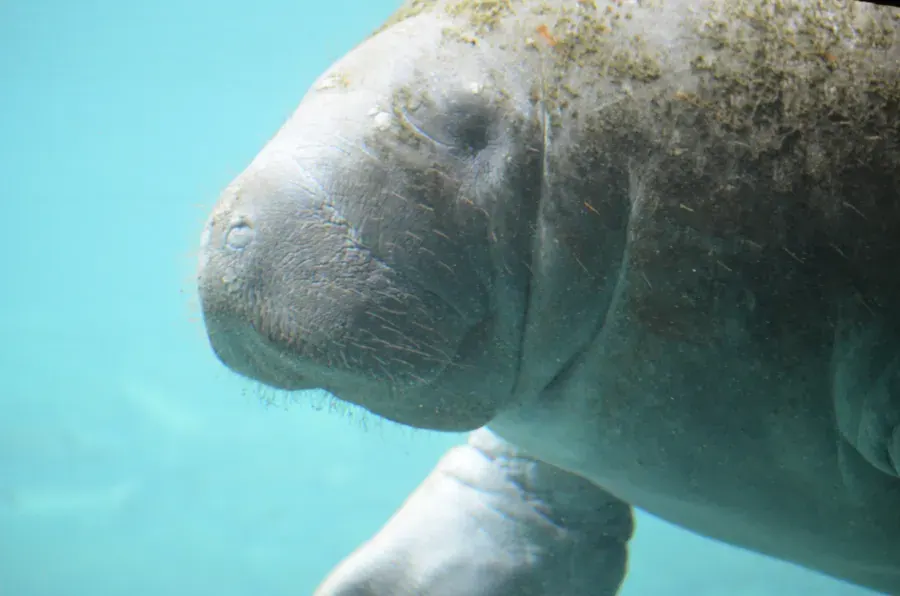
Manatees are large, fully aquatic, mostly herbivorous marine mammals sometimes known as sea cows. Half a manatee's day is spent sleeping in the water, surfacing for air regularly at intervals no greater than 20 minutes. Manatees spend most of the rest of their time grazing in shallow water, inhabiting the marshy coastal areas and rivers of the Caribbean Sea and the Gulf of Mexico.
Classification
Kingdom: Animalia
Phylum: Chordata
Class: Mammalia
Order: Sirenia
Family: Trichechidae
Genus: Trichechus
Other names: Sea Cow, Sirenians, Mermaids
Conservation Status
Endangered.
Size
8 to 13 feet long; weigh 440 to 1,300 lbs.
Habitat
Found in the warm waters of shallow rivers, bays, estuaries, and coastal waters. Rarely venture into waters below 68°F.
Description
Large, gray, rotund creatures with small pectoral flippers.
Diet
Herbivores that spend 6-8 hours a day feeding, consuming 10% to 15% of their body weight daily on water grasses, weeds, and algae.
Communication
Communicate through sight, sound, and touch.
Gestation
Approximately one year.
Birth
Calves are 3 to 4 feet long and 60-70 lbs at birth, born underwater.
Sexually Mature
Females around 5 years old; males around 8 years old.
Life Span
Average 40 years in the wild; some live up to 60 years.
Social Structure
Non-aggressive and non-territorial. Semi-social, and have been observed in social play.
Did You Know?
Manatees can swim 5 miles an hour, but can reach 15 miles an hour in short bursts.
Did You Know?
Manatees prefer waters that are approximately 3-7 feet deep.
Manatees in Foreign Languages
AlbanianLopë Deti
DutchZeekoe
FinnishManaatti
FrenchLamantin
GermanManati
LatinManatus
PolishManat
PortuguesePeixe-boi / Manati
RomanianLamantin
SpanishManatí
SwedishSjöko