Subspecies
The gray wolf (Canis lupus) is really an umbrella for a wide range of regional forms — taxonomists have proposed dozens of subspecies over the years, though the exact count is still debated. Well-known examples include the Arctic wolf, Mexican wolf, Eastern timber wolf, Great Plains wolf, and the Eurasian wolf found across Europe and Asia. Each is adapted to its own climate and prey, but all share the same core biology and pack structure.
Population & Range
Gray wolves once ranged across most of the Northern Hemisphere. Hunting, habitat loss, and government-sponsored eradication programs eliminated them from most of the contiguous United States and much of Western Europe by the mid-20th century. Today the largest populations are in Canada, Alaska, and Russia, with recovering populations in the Great Lakes region, the Northern Rockies, and parts of continental Europe thanks to legal protection and reintroduction programs.
Conservation Status
The species as a whole is not currently considered globally threatened, but that masks big regional differences — some subspecies and regional populations, like the Mexican wolf, are critically endangered with only a few hundred individuals in the wild, while other populations have rebounded strongly under protection. Wolf management remains politically contentious in much of their range, balancing livestock and land-use concerns against conservation goals.
Physical Traits
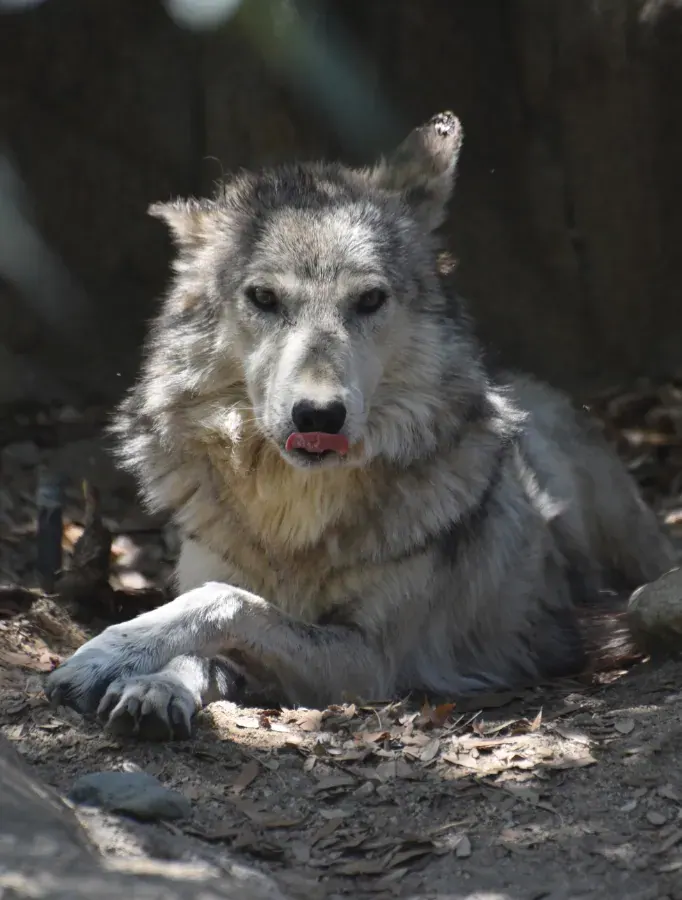
Despite the name, "gray" wolves aren't always gray — coat color ranges from white and cream through tan, brown, and gray to solid black, often varying with climate and region. Northern populations tend to run larger and paler; southern populations are typically smaller and darker-coated. All gray wolf subspecies share the same basic build: long legs, large paws, a deep chest, and a bushy tail.