Classification & Appearance
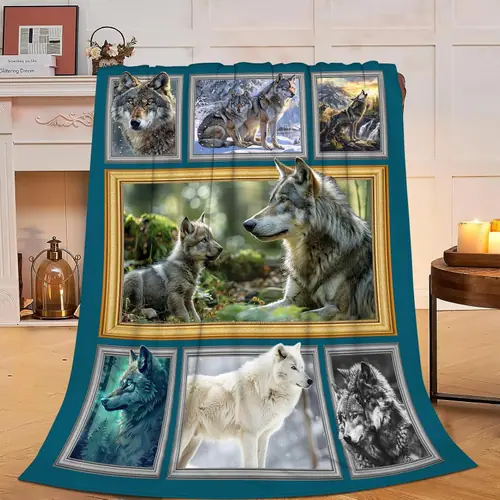
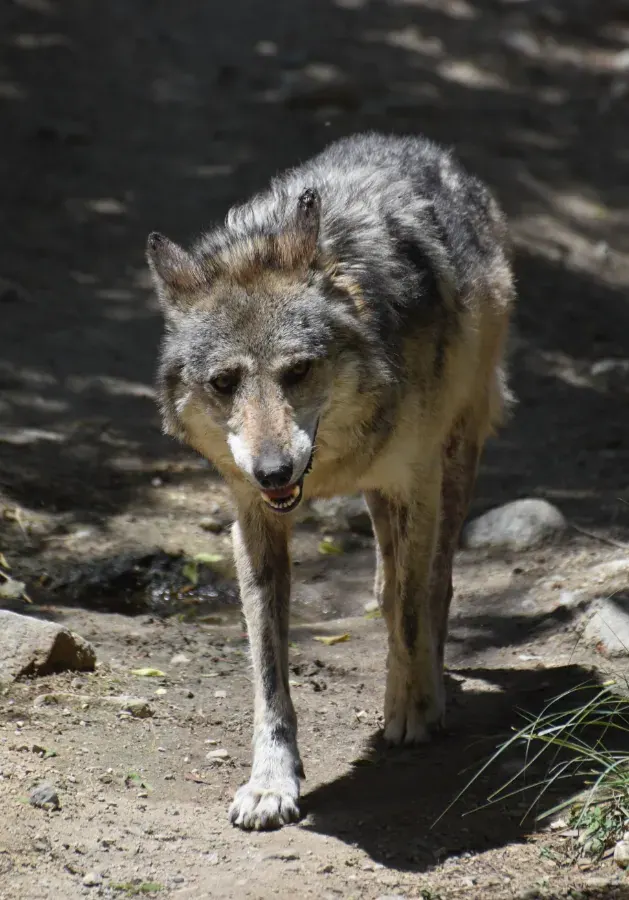
The gray wolf's scientific name is Canis lupus — it is the direct ancestor of every domestic dog breed alive today, and the largest wild member of the dog family. Wolf coat color varies by region: wolves in colder northern climates tend toward white or pale gray, while populations further south run yellowish-brown to black. A wolf's thick double coat is what lets it withstand the extreme cold of northern winters.
Size & Movement
Wolves have long legs built for covering ground, and walk or run on their toes. Their paws are large — roughly 4 inches wide and 5 inches long — with five claws on the front feet and four on the back. Over long distances a wolf cruises at around 5 mph, but it can put on a burst of speed above 35 mph when chasing prey. Wolves aren't the fastest land animal, but they're built for endurance: a cheetah can outrun a wolf in a sprint, but tires out far sooner.
Senses & Hunting
A wolf's sense of smell is roughly 100 times more sensitive than a human's, and wolves are opportunistic hunters, constantly on watch for the weakest or most vulnerable animal in a herd. A wolf has 42 teeth and a bite force estimated around 400 psi — enough to crush bone. Wolves often work together to bring down large prey, but once the animal is down, it's every wolf for itself at the kill.
Social Structure & Communication
Wolf packs have a complex, two-track hierarchy — one for females, one for males — led by an alpha pair, with an "omega" wolf at the bottom of the order. Wolves communicate constantly through body language: the position of the tail and ears, and facial expressions (researchers have catalogued as many as 17 distinct ones), all carry meaning within the pack. A wolf raises the fur along its back (its hackles) to look larger when showing aggression, and shows submission by dropping its head or rolling onto its back.
Reproduction & Pups
Wolves breed once a year, carrying their young for about 63 days. Litters commonly number 4 to 7 pups, though larger litters do occur depending on the mother's health and nutrition. Pups are born blind, deaf, and weighing about a pound — and pup mortality can run as high as 50%. The whole pack pitches in to raise them: adult wolves help guard the den and share food from their kills with the pups and the nursing mother. Once pups are old enough to travel, the pack becomes nomadic again, following the migrating herds it depends on.