A Truly Global Species
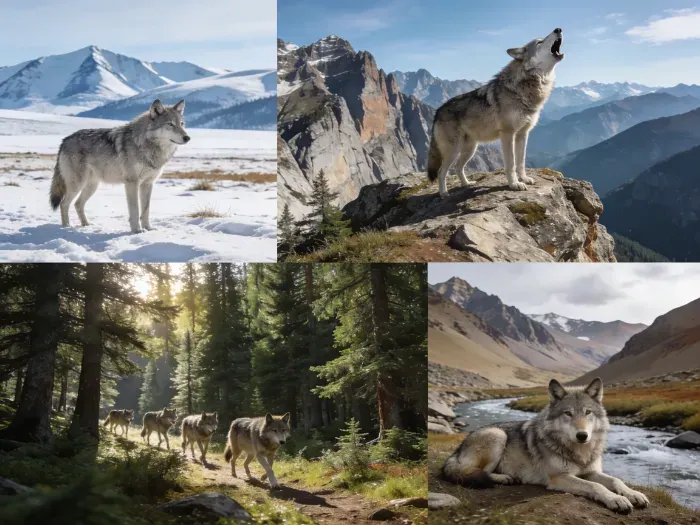
Before widespread persecution by humans, the gray wolf had the largest natural range of any land mammal on Earth besides humans themselves — found across nearly all of North America, Europe, and Asia. Today wolves survive in strongholds across Canada, Alaska, Russia, and parts of Central Asia, with smaller, more fragmented populations in the continental United States, Western Europe, the Middle East, and the Indian subcontinent.
Regional Faces of the Wolf
The Eurasian wolf ranges from Western Europe across Russia to China. The Arabian wolf, one of the smallest gray wolf subspecies, survives in small desert-adapted populations across the Middle East. The Indian wolf, an older and genetically distinct lineage, inhabits the grasslands and scrublands of the Indian subcontinent. Each of these regional wolves has adapted its size, coat, and hunting style to fit strikingly different climates, from Arctic tundra to arid desert.
Wolves in Myth & Culture
Few animals loom as large in human storytelling. In Roman legend, a she-wolf nursed the abandoned twins Romulus and Remus, the founders of Rome. Norse mythology cast the great wolf Fenrir as a figure of chaos powerful enough to threaten the gods themselves. Many Native American traditions honor the wolf as a symbol of loyalty, family, and skilled hunting. European folklore took a darker turn, with cautionary tales like "Little Red Riding Hood" and "The Boy Who Cried Wolf" casting wolves as danger and deception — a reputation that shaped centuries of wolf persecution across the continent.
A Global Conservation Story
Wolf conservation looks different from country to country. Yellowstone National Park's 1995 wolf reintroduction is one of the best-studied conservation success stories in North America, credited with reshaping the park's entire ecosystem by controlling elk populations. Europe has seen a quieter comeback, with wolves recolonizing parts of Germany, France, and Scandinavia on their own as legal protections took hold. Elsewhere, subspecies like the Mexican wolf remain critically endangered, kept alive only through captive breeding and careful reintroduction.