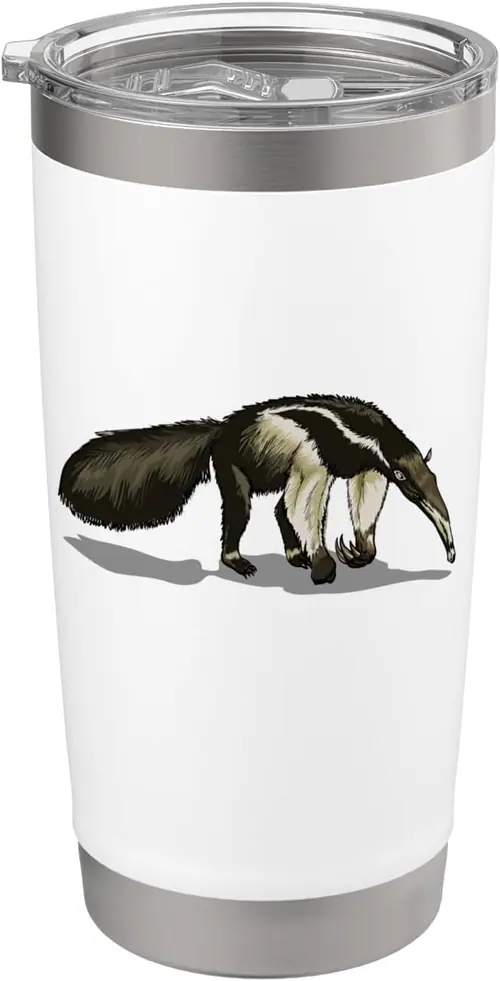
Standing Tall as a First Warning
When threatened, a giant anteater will often rear up onto its hind legs, using its long tail for balance, to appear larger and more intimidating to jaguars, pumas, and other predators. This upright stance is usually a warning rather than an immediate attack — a bluff meant to discourage a confrontation before it starts.
Claws as a Last Resort
If a predator presses the attack, the anteater will use the same powerful front claws built for tearing open termite mounds to defend itself, wrapping its forelimbs around an attacker in a bear hug and delivering deep slashing wounds. These claws, which can measure up to four inches, are sharp enough to seriously injure even large cats.
Relying on Poor Eyesight — of the Predator, Not Itself
Anteaters themselves have weak eyesight, but they compensate with an excellent sense of smell, which helps them detect approaching predators before being seen. Many encounters are avoided entirely simply because the anteater notices danger early and moves off before a predator gets close.
Smaller Species Rely on Different Tricks
Smaller relatives like the tamandua and the silky anteater have their own defenses: the tamandua can release a strong, unpleasant-smelling secretion from a gland near its tail, while the tiny silky anteater relies on camouflage, curling into a ball that resembles a seed pod within the silk-cotton trees it inhabits.