Two Genera, Not Close Relatives
Despite the similar name, two-toed and three-toed sloths belong to entirely separate genera and are not especially close relatives — the resemblance between them is largely a case of convergent evolution toward a shared slow, tree-dwelling lifestyle.
The Name Refers to the Front Feet Only
Confusingly, both types of sloth actually have three toes on their hind feet — the name refers specifically to the number of claws on the front feet, where two-toed sloths have two and three-toed sloths have three.
Different Faces and Neck Flexibility
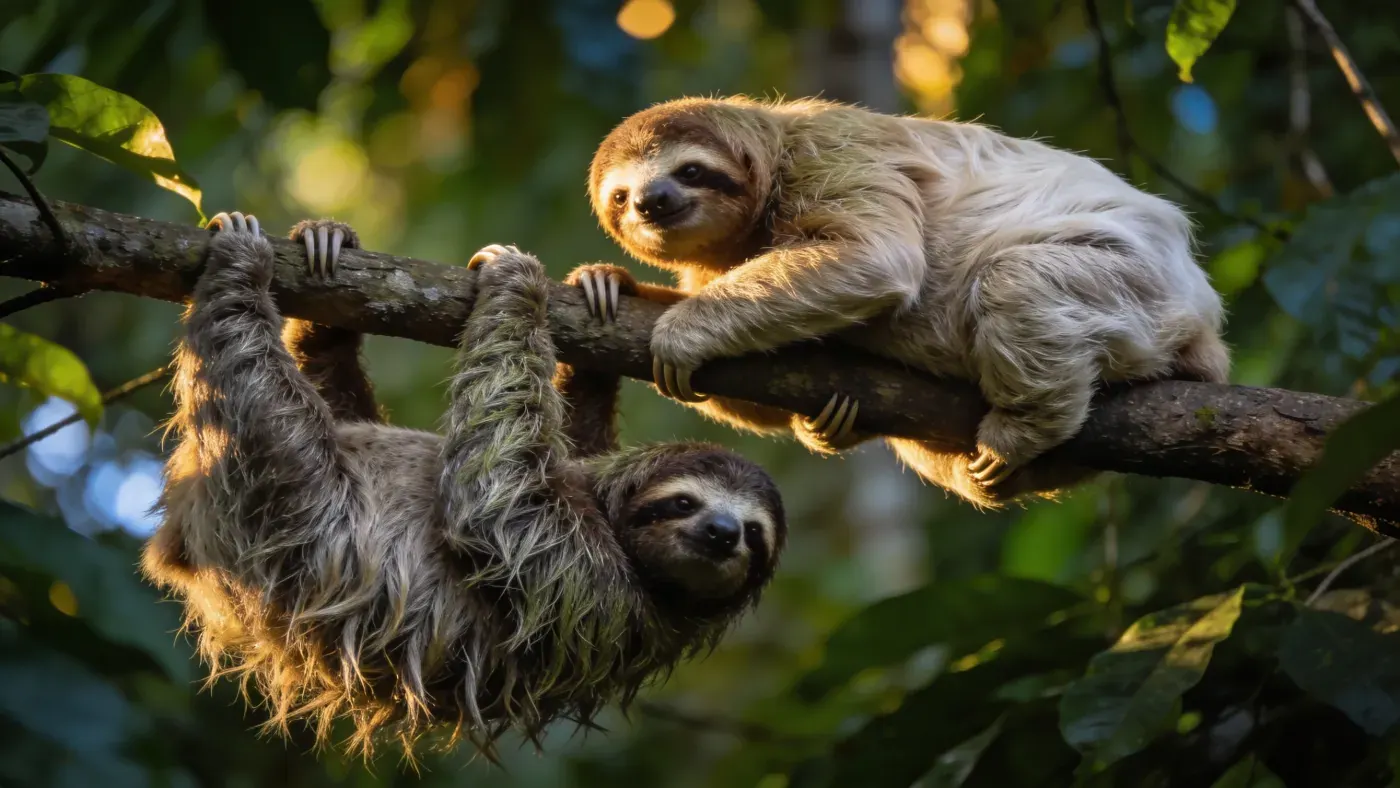
Three-toed sloths have a distinctive flattened, almost permanently "smiling" face and can rotate their heads roughly 270 degrees thanks to extra neck vertebrae, while two-toed sloths have a more pointed snout and less extreme neck flexibility.
Different Paces of Life
Two-toed sloths are generally somewhat faster-moving, more active at night, and have a broader, more varied diet than three-toed sloths, which are stricter leaf-eaters and tend to be active during both day and night in shorter bursts.


